Boudica Statue on Westminster Bridge | Warrior Queen of London – See All The Sights
Boudica on Westminster Bridge
The Warrior Queen Who Burned Roman London
Boudica on Westminster Bridge
The Warrior Queen Who Burned Roman London
Just steps from the roar of Westminster Bridge, with the Thames sliding past and Parliament rising behind her, a fierce ancient queen stands frozen in bronze. Spear raised, horses rearing, daughters beside her, Boudica looks as if she is about to charge straight into the heart of modern London.
Most people walk past this statue without realising they are standing beside one of the most powerful symbols of rebellion in British history.
Where to Find the Statue
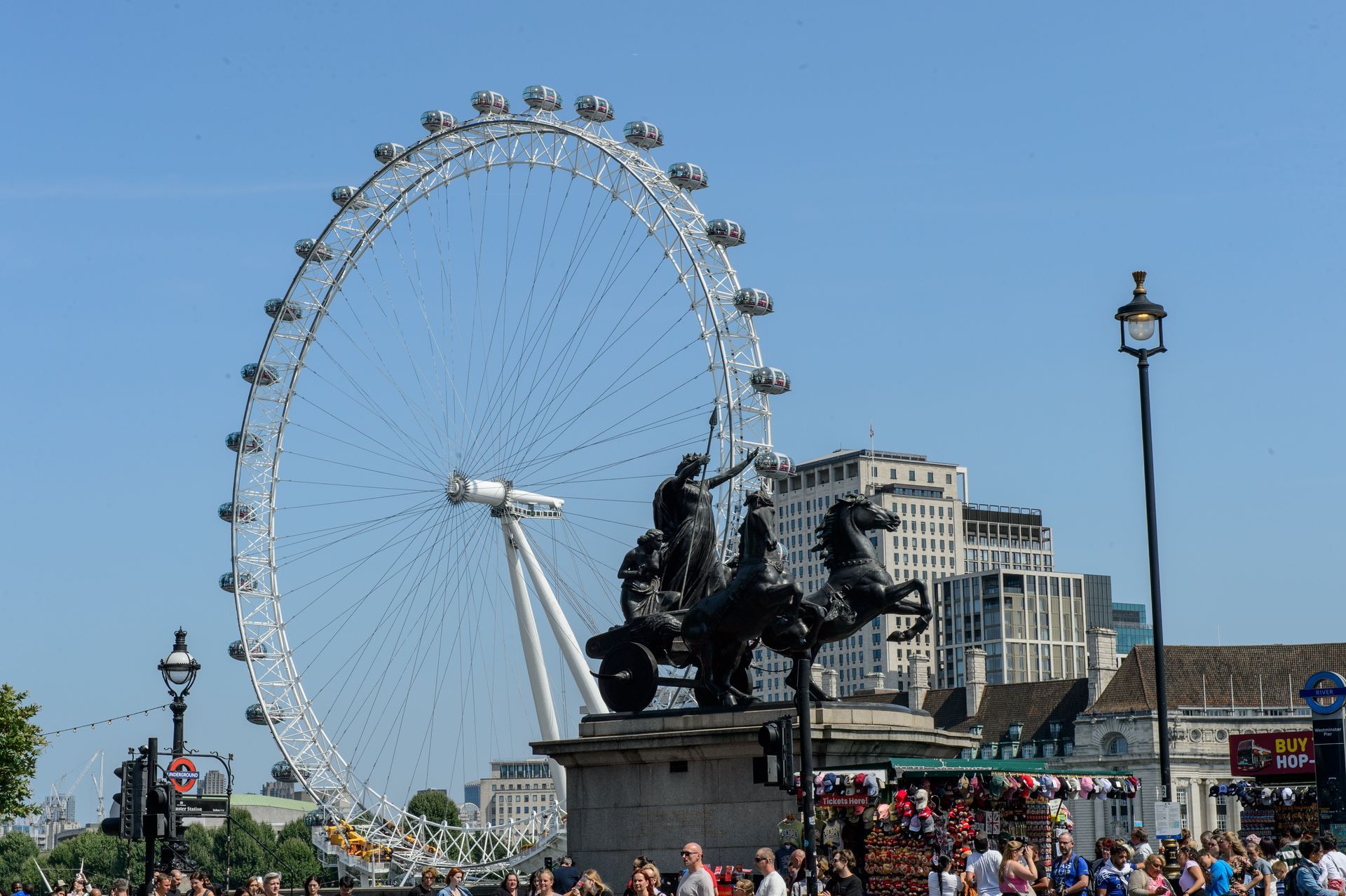
The Boudica statue stands at the northern end of Westminster Bridge on Victoria Embankment, beside the River Thames and Westminster Pier. With Big Ben and the Houses of Parliament behind her, it is one of the most dramatic and symbolic locations in London.
It feels as though Boudica is still facing down power itself.
What the Statue Shows
Officially titled “Boadicea and Her Daughters”, the sculpture captures a moment of fierce determination. Boudica stands upright in a war chariot with her spear raised, her two daughters ride beside her, two powerful horses rear forward, and scythes fitted to the wheels give the chariot a terrifying, war-like presence. The scene is designed to look unstoppable — not a queen in defeat, but a leader at the height of defiance.
Why the Statue Uses the Wrong Name
The queen’s correct name is Boudica, although you will sometimes see Boudicca used as a Latinised version. The spelling “Boadicea”, which appears on the Westminster statue, is actually a Victorian error that came from a medieval copying mistake; it became popular in poems, paintings, and monuments even though it is historically wrong. “Bodica” and “Bodcea” are simply modern misspellings.
Who Created It
The statue was designed by Victorian sculptor Thomas Thornycroft. He began work on it in the 1850s, but it was not installed in Westminster until 1902, long after his death. The Victorians were fascinated by heroic British origin stories, and Boudica — a fearless woman who fought a mighty empire — fitted perfectly into their vision of national pride.
Who Was Boudica?
Boudica was queen of the Iceni, a powerful tribe in what is now East Anglia. After the Roman conquest of Britain, her people lived under Roman control, but tension was constant. When Boudica’s husband Prasutagus died, Roman officials moved in to seize Iceni lands. According to ancient sources, Boudica was publicly beaten and her daughters were attacked. This brutal treatment sparked one of the greatest revolts in British history.
The Rebellion That Burned London
In AD 60–61, Boudica united several tribes and launched a massive uprising against Roman rule. Three major Roman cities were destroyed: Colchester (Camulodunum), London (Londinium), and St Albans (Verulamium). London was burned to the ground. Even today, archaeologists can find a layer of ash beneath the streets — the physical scar of Boudica’s rebellion.
The Final Battle
The Romans eventually regrouped under their governor, Suetonius Paulinus, and defeated Boudica’s army in a decisive battle along what became known as Watling Street. Rather than be captured, Boudica is believed to have taken poison. Her rebellion failed — but her legend lived on.
Why She Stands Beside Parliament
The location of the statue is no accident. Placing Boudica beside Westminster and Parliament gives her a powerful meaning. She represents resistance, justice, and the fight against oppression — standing forever in the shadow of modern British power. It is one of the most symbolic statues in the entire city.
See Boudica on Our London Walking Tours
You can see the Boudica statue up close on several of our most popular See All The Sights experiences.
On the Harry Potter Filming Location Walking Tour in London, you walk past Boudica while exploring the real Westminster streets that link together famous film locations, Diagon Alley inspirations, and Ministry of Magic settings.
During the London Christmas Lights and History Walking Tour, Boudica stands dramatically beside the Thames as Westminster glows with festive lights, creating one of the most atmospheric moments of the entire walk.
And on the London Royal Crown and Changing of the Guard Walking Tour, you pass this powerful monument while exploring the political and royal heart of the capital, from Parliament Square to Buckingham Palace.
Each route shows Boudica in a different light; film, festivity, and royal history all meet beside this defiant queen, making her one of the most memorable landmarks on our London walks.
Learn More About London